
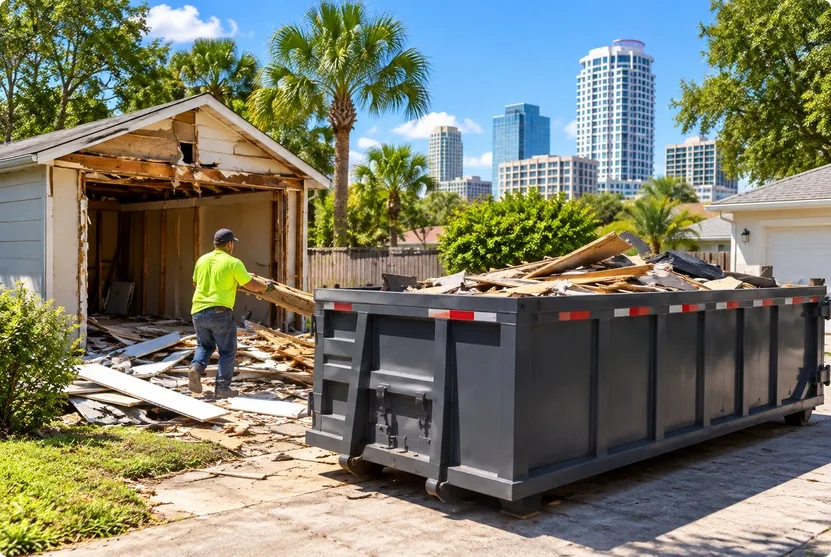
For most backyard shed teardowns, a 10 or 15 yard dumpster is enough, while a small detached garage usually calls for a 20 or 30 yard container. The right roll off container rental depends on the building's size, what it is made of, and how much heavy material, like concrete or roofing, comes out with it.
Getting the size right the first time saves you from a second haul, an overweight fee, or a half full container you paid too much for. At Tip Top Containers, we help Orlando homeowners match the dumpster to the teardown before it ever hits the driveway. To lock in a drop-off date, reach out to our team at (407) 660-2022 and tell us what you are taking down.
What size roll off container rental do you need for a shed or garage teardown?
A small wood or metal shed typically fits in a 10 or 15 yard dumpster. A larger shed or a one car detached garage usually needs a 20 yard container, and a two car garage often calls for a 30 yard.
Demolition debris takes up more space than people expect. A shed that looks compact standing up turns into a tangle of framing, siding, roof sheathing, and shingles once it comes down, and none of it stacks neatly. Doors, windows, and shelving add bulk too. Break panels down and lay long boards flat to fit more in the container.
Orlando's older neighborhoods have plenty of these projects. In College Park and Delaney Park, many homes from the 1920s and 1930s still have detached garages along back alleys, and plenty of them are worn out past saving. Those structures often have plaster, old roofing layers, or heavier lumber than modern sheds, which pushes the job toward a larger container. Our demolition dumpsters come in sizes built for exactly these teardowns, and we will help you pick one based on photos or a quick description.
What are the weight limits for wood, drywall, and roofing debris?
Every dumpster has a weight allowance as well as a size, and heavy demolition debris can hit that limit before the container looks full. Wood is relatively light, drywall is heavier, and roofing shingles and concrete are the heaviest materials in most teardowns.
Asphalt shingles are the usual surprise. A single layer adds up fast, and older sheds sometimes have two or three layers stacked on top of each other. Drywall from a finished garage soaks up weight too, especially if it got wet. Concrete is in a category of its own. Footings, slabs, and block are so dense that they typically go in a separate container meant for heavy materials, rather than mixed in with general debris.
That is exactly what caught one homeowner off guard. They were tearing down a backyard shed to make room for a pool and expected nothing but lumber and roofing. Then came the concrete footings, a beat-up mower that looked decades old, and an old workbench. They needed an alternate container plan to handle the extra material. Tell us up front if there is concrete, old equipment, or anything heavy hiding inside, and we will plan for it. Gas and oil should be drained from mowers, and some items cannot go in a dumpster at all.
Where should the dumpster go, and do you need a permit in Orlando?
Most homeowners place the dumpster on their own driveway, which usually avoids the need for a placement permit. If the container must sit on the street or another public right-of-way, a permit is typically required from the city or county.
Driveway placement is the simplest option. The truck needs a clear, straight approach and enough room to tilt the container off. Move vehicles, mark sprinkler heads, and look up. Orlando's big live oaks spread wide over many driveways, and low branches or power lines can block delivery. Boards placed under the container's rails help protect the driveway surface.
Permits depend on where you live. The City of Orlando and unincorporated Orange County each set their own rules for dumpsters on public streets, and HOAs may have rules of their own. The teardown itself may also need a demolition permit, especially for a garage with electrical service. Check with your local building department before the work starts.
How should you schedule dumpster delivery and pickup around a teardown?
Schedule delivery for the day before or the morning of demolition, and plan pickup for right after the last load goes in. Most residential teardowns take a few days, so a short rental window usually works.
Book early, especially in spring and before hurricane season, when demand rises. Have power disconnected and anything worth keeping removed before the container arrives. If the job runs long, call us before the rental ends and we can usually extend it or swap in an empty container. Load heavy debris evenly, and keep everything below the top edge so the truck can haul it safely. If you are clearing out the rest of the yard or garage at the same time, our standard dumpster rentals can handle general cleanup debris alongside the demolition.
Ready to schedule your teardown? Call Tip Top Containers at (407) 660-2022, or reserve your roll off container rental today, and we will deliver the right size dumpster on the day you need it.