
The right dumpster size for a home renovation depends on the scope of the project and the type of debris it produces. A kitchen remodel generates a different volume, and a different weight, than a roofing tear-off or a whole-home cleanout. Getting that match right before the dumpster arrives means one trip instead of two and no overage surprises at pickup. Tip Top Containers delivers roll-off dumpsters to Orlando-area homeowners with the hydraulic trucks designed specifically for open-top residential delivery. Call Tip Top Containers to reserve the right size or reach the team at (407) 660-2022 before your project start date, particularly if you are planning for spring or fall when demand runs high.
How a roll-off dumpster is different from what you may be picturing
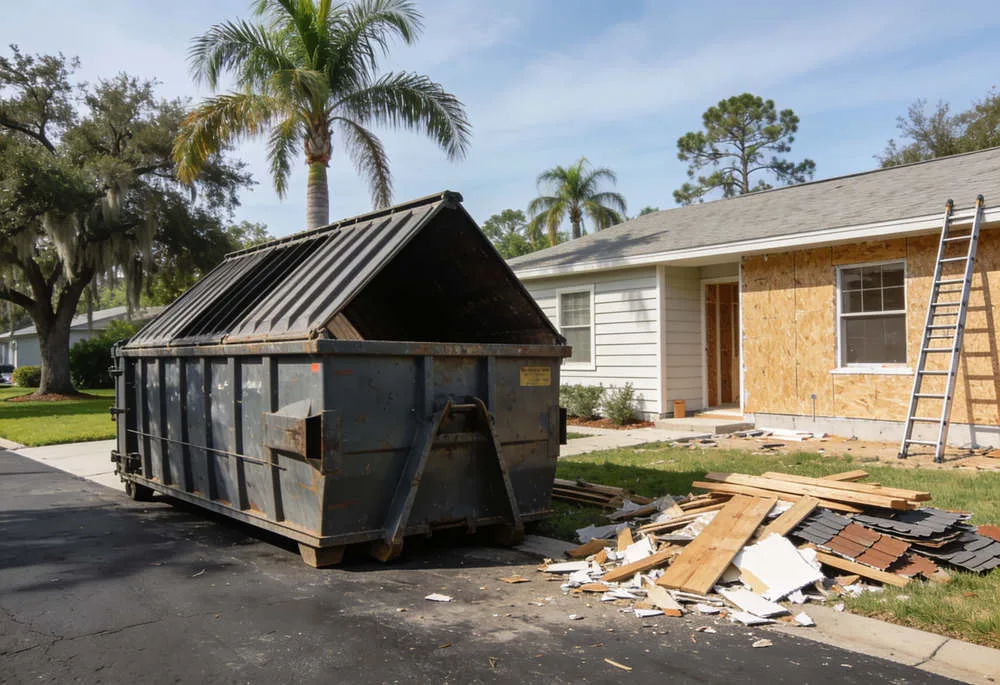
Homeowners in the Winter Park area doing their first renovation sometimes expect a dumpster to look like a large trash bin. A roll-off is a different piece of equipment entirely. It is an open-top rectangular container, sized in cubic yards, delivered flat on a specialized hydraulic roll-off truck that lowers it to the ground at your driveway or designated spot on the property. You load it from the top and from the open door on one end, and the truck returns when the project is done to haul it away. There is no lid, no manual emptying by a driver, and no scheduled pickup on a fixed route. The container stays on site for the duration of your rental period and leaves when you call for pickup.
This delivery method is what makes roll-offs practical for renovation projects in the MetroWest area and similar Orlando subdivisions where the work generates debris over multiple days. You are not restricted to what fits in a bin before a Tuesday pickup. The container is there until you are done, and you fill it at whatever pace the project demands.
The open-top design also means what goes in matters. Household renovation debris, drywall, lumber, flooring, cabinets, fixtures, roofing shingles, and general construction waste is what these containers are built for. Heavy materials like concrete, brick, tile, and soil have weight limits that vary by container size and haul distance. Homeowners in the College Park area renovating older homes with original tile or concrete foundations need to discuss the heavy-debris situation with Tip Top before filling the container with dense material, because weight limits for heavy debris are different from general construction waste and exceeding them creates overage charges that were not in the original plan.
Matching container size to your project
Roll-off containers are typically measured in cubic yards, and the right size depends on the project type and debris density. Here is how common Orlando renovation projects generally map to container sizes:
- Kitchen or bathroom remodel: a smaller container in the 10 to 15 cubic yard range typically handles the cabinets, fixtures, tile, and drywall from a single-room renovation without leaving dead space.
- Roofing tear-off: roofing shingles are dense and heavy for their volume. A 20-yard container is a common choice for a standard residential roof, but the weight of the shingles often matters as much as the cubic footage. Ask about weight limits before filling a roofing container.
- Deck or fence removal: pressure-treated lumber and concrete footings together can fill a mid-size container quickly. A 15 to 20-yard container depending on the deck size is a typical range.
- Whole-home cleanout or estate cleanout: these projects generate high volume from furniture, appliances, and accumulated household material. A 20 to 30-yard container gives the clearance needed without requiring a mid-project swap.
- Landscaping overhaul: soil, root balls, sod, and organic material add up in weight faster than volume, and wet material from Florida's rainy season is heavier than dry. Discuss the material type with Tip Top before selecting the container size.
When you need a demolition dumpster instead
Standard roll-off containers handle most residential renovation debris. Projects involving structural demolition, interior gut-outs, or significant amounts of concrete and masonry may be better served by demolition dumpsters, which are rated for heavier loads and the type of mixed dense debris that a full teardown or major structural project produces. If your project involves knocking out walls down to the studs, removing a slab, or doing anything that generates significant volumes of concrete or masonry alongside general construction waste, that conversation is worth having before the container is delivered.
Why booking early matters in 2026
Orlando's renovation market is active, and container availability reflects that. Spring and fall are the peak rental seasons when crews are finishing projects before summer heat or before the holidays, and the sizes that fit those projects, particularly 15 to 20-yard containers, move fast in March, April, October, and November. A homeowner who waits until the week before demolition starts sometimes finds the size they need is not available for their dates. Booking the container when the project schedule is confirmed rather than treating it as a last-day detail keeps the timeline intact.
If you know your project start date, the type of debris it will produce, and a rough sense of the volume, that is enough to get the right container reserved. When in doubt, describing the project to the Tip Top team directly gets you a recommendation without guesswork on your end. Book your dumpster rental with the right size for your project by calling Tip Top Containers at (407) 660-2022 or reserve your Orlando roll-off dumpster with Tip Top Containers before your project dates are locked in.